Kuwait City · All sections
01 / 13
01
Why Kuwait City?
Gulf Road · souqs · museums · desert · Ramadan nights
Expect days around 22°C and nights near 9°C, with rain on about three days of the month. The sun rises around 6.30am and sets around 5.35pm in mid-February, so you get about eleven hours of daylight. Bring a warm layer for the evenings and the desert.
What makes it special
A city on the water
Gulf Road follows the coast for kilometres, from Kuwait Towers to the marina at Salmiya, with beaches, walkways and cafés by the sea.
Towers that became a symbol
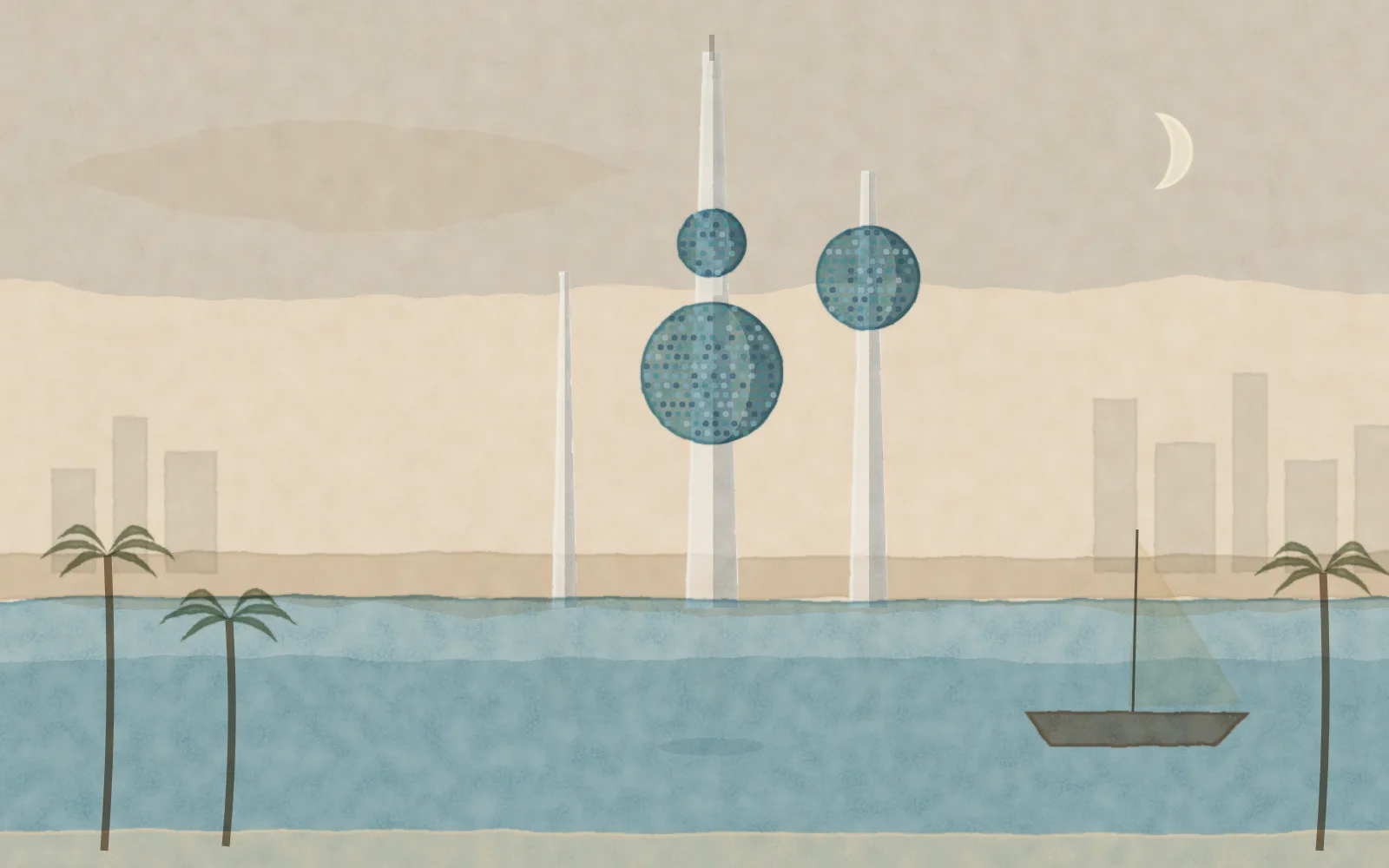
Kuwait Towers opened in 1979 as water towers and won the Aga Khan Award for Architecture in 1980. Each February they are lit in the colours of the flag.
A souq that still trades
Souq Al-Mubarakiya has sold gold, dates, spices and oud for at least two centuries. Tea is still brewed over coals in its courtyard.
A new cultural district
An opera house, one of the world’s largest museum complexes and a park built as a green roof line the road into the centre.
Kuwaiti food
Machboos, murabyan with prawns and mutabbaq samak fish on rice. In Ramadan, iftar and the late-night ghabga are when families eat together.
Bedouin weaving and Islamic art
Al Sadu weaving is on UNESCO’s heritage list, and the Tareq Rajab Museum was the Gulf’s first museum of Islamic art.
Spring in the desert
Between November and March families pitch winter camps in the desert. February is the heart of the season.
The national days
National Day on 25 February and Liberation Day on 26 February fill Gulf Road with flags and lights. This year the celebrations fall in Ramadan.
WundrPath
City guides, month by month. Every place checked, with halal food and prayer notes in every guide.
System
Day
Night
© 2026 WundrPath