Maldives · All sections
01 / 13
01
Why the Maldives?
Atolls · lagoons · reefs · coral-stone mosques · island life
Expect days around 31°C, nights near 26°C and a sea of about 28°C. The sun rises around 6.15am and sets around 6.10pm, so days are close to twelve hours long. January is one of the driest, sunniest months; pack light cotton, a sun hat and a layer for air-conditioned boats and planes.
What makes it special
A country made of islands
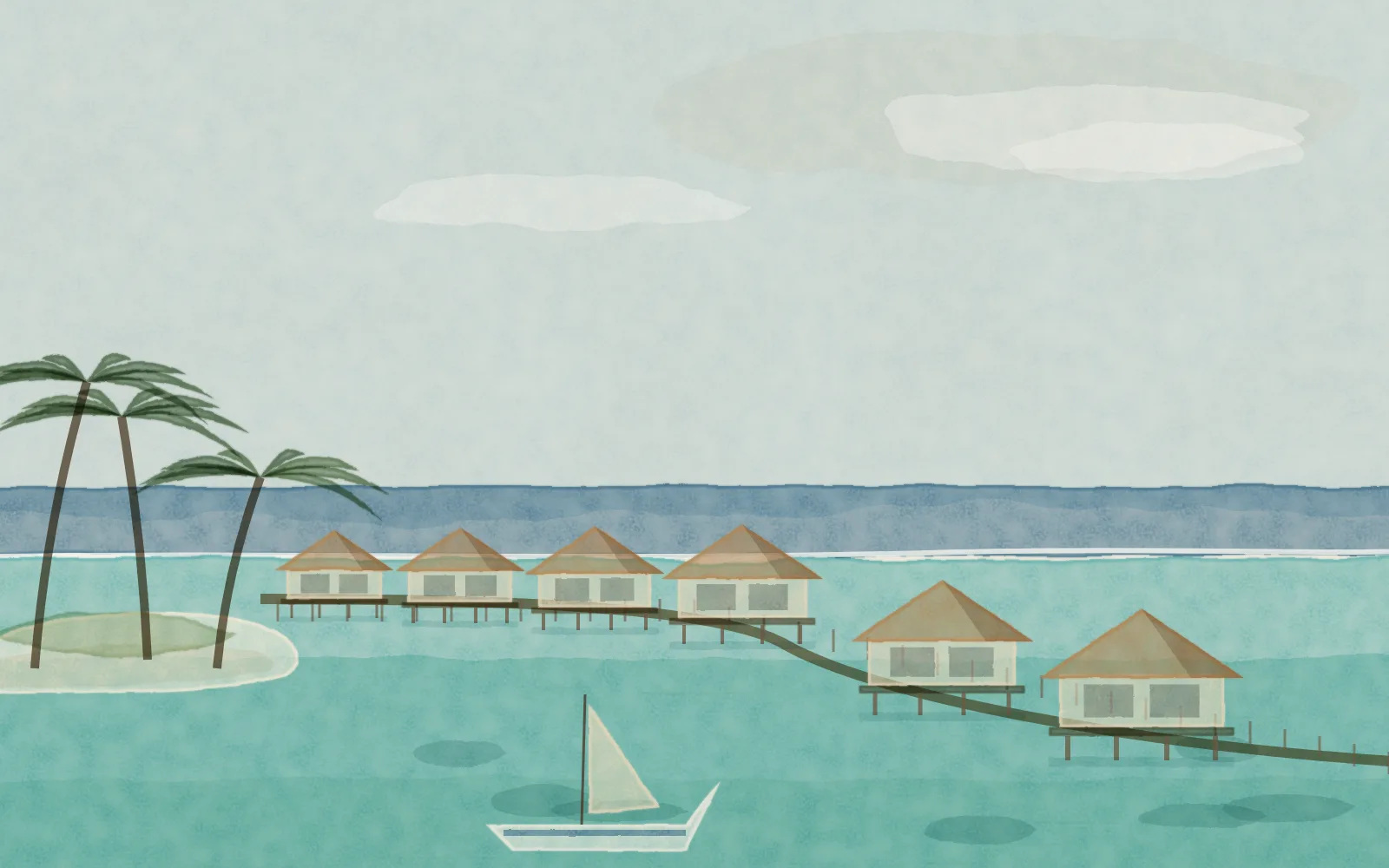
About 1,190 coral islands sit in 26 natural atolls across the Indian Ocean. The highest natural ground is only a few metres above the sea.
The dry season
January falls in the north-east monsoon: little rain, calm seas on most days and long hours of sunshine.
Water like glass
Lagoons shade from white sand to turquoise to deep blue. Clear January water makes snorkelling easy, often straight from the beach.
One island, one resort
Most resorts fill a whole island of their own. Since 2009, you can also stay in guesthouses on local inhabited islands.
Mantas and whale sharks
Reef mantas are seen all year, and South Ari Atoll is known for whale sharks in every month.
A Muslim country
Islam is the state religion. Food outside resorts is halal, the call to prayer sets the day and Friday is the main day off.
Coral-stone heritage
Malé’s Old Friday Mosque, completed in 1658, is carved from blocks of coral. It is on UNESCO’s tentative list.
A small, busy capital
Malé packs mosques, markets and a museum onto one crowded island, a short ride from the airport.
WundrPath
City guides, month by month. Every place checked, with halal food and prayer notes in every guide.
System
Day
Night
© 2026 WundrPath