Tenerife · All sections
01 / 13
01
Why Tenerife?
Teide · laurel forest · UNESCO old town · cliffs · whales · Carnival
Expect coastal days around 21°C and nights near 15°C in Santa Cruz, a little warmer in the south. The sun rises around 7.45am and sets around 6.55pm, so you get about eleven hours of daylight. Pack a warm jacket for Teide, where nights fall near freezing.
What makes it special
Two climates on one island
The trade winds bring cloud to the north, so Puerto de la Cruz and La Laguna are greener and cooler, while the south around Los Cristianos and Costa Adeje stays sunny and dry.
Spain’s highest peak
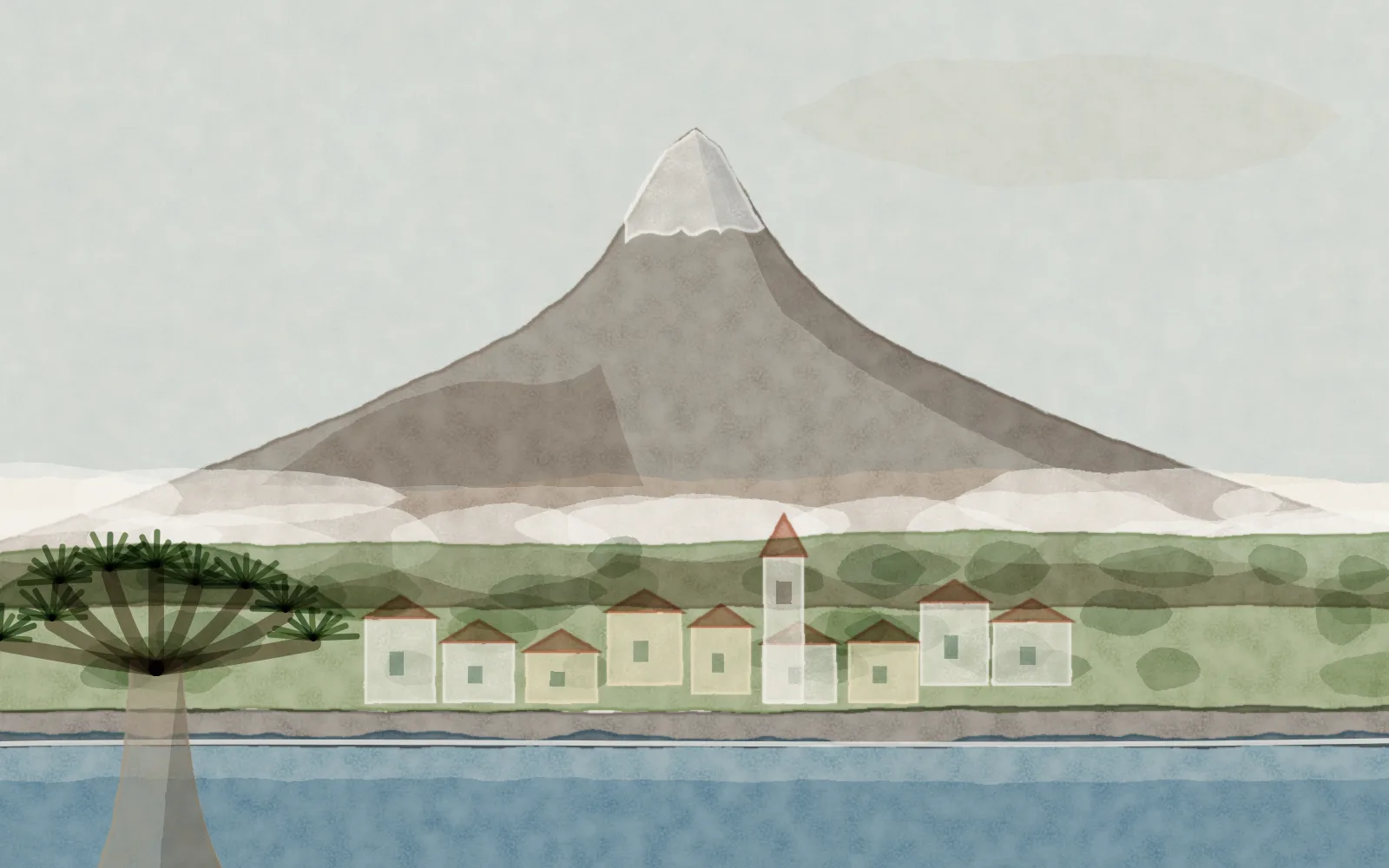
Teide rises to 3,715 metres in a national park that has been a UNESCO World Heritage Site since 2007. A cable car climbs to 3,555 metres.
A model colonial town
La Laguna, founded in 1496, kept its original street plan, which shaped cities across Latin America. It became a UNESCO World Heritage Site in 1999.
A forest in the clouds
The Anaga mountains, a UNESCO Biosphere Reserve since 2015, keep some of the old laurel forest that once grew around the Mediterranean.
Cliffs and whales
The Los Gigantes cliffs rise 300 to more than 600 metres straight from the sea, and pilot whales and bottlenose dolphins live off the south-west coast all year.
Gardens and sea pools
Puerto de la Cruz has a botanical garden founded in 1788 and César Manrique’s seawater lido, Lago Martiánez.
Carnival in late February
In 2027 the street Carnival of Santa Cruz runs from 19 to 28 February, two weeks later than usual.
Winter sun
February is mild by the sea, with few rainy days in the south. It is one of Europe’s warmest places to spend the winter.
WundrPath
City guides, month by month. Every place checked, with halal food and prayer notes in every guide.
System
Day
Night
© 2026 WundrPath